
Search Utah Family Court Records
Utah family court records are public documents held by District Courts across all 29 counties in the state. These case files cover divorce, custody, child support, adoption, guardianship, protective orders, paternity, and other domestic relations matters. You can search and access these records online through the state court system, in person at any District Courthouse, or through the XChange subscription portal at utcourts.gov. Utah law gives the public the right to inspect court records, making it straightforward to look up case information for family law matters statewide.
Utah Family Court Records Quick Facts
How Utah Family Court Records Work
Utah District Courts handle all family law matters across the state. Each of the 29 counties falls within one of 8 judicial districts. The District Court in each county maintains the case files for every family law matter filed there. These courts have general jurisdiction, which means they handle divorce, custody, child support, paternity, adoption, guardianship, and protective orders all under the same roof. When someone files a family law case, the clerk assigns a case number and opens a file. That file becomes a public record unless a court order seals it.
The state gives the public access to these records through several channels. The XChange system at utcourts.gov is the main online tool for searching Utah court records. XChange is a subscription service that costs $30 per month for unlimited searches, or you can pay per search at $0.15 to $0.35 for the first 500 searches each month. Downloading individual documents costs $0.50 to $1.00 each. If you prefer free access, public terminals are available at most District Courthouses and at the Utah State Law Library, located at 450 South State Street in Salt Lake City.
Utah's Government Records Access and Management Act, known as GRAMA, is found at Utah Code section 63G-2. It gives every person the right to inspect government records free of charge. Copy fees may apply when you request physical or digital copies of documents. GRAMA covers court records as well as records held by other government offices. The law requires agencies to respond to records requests within 10 business days under Rule 4-202 of the Utah Code of Judicial Administration.
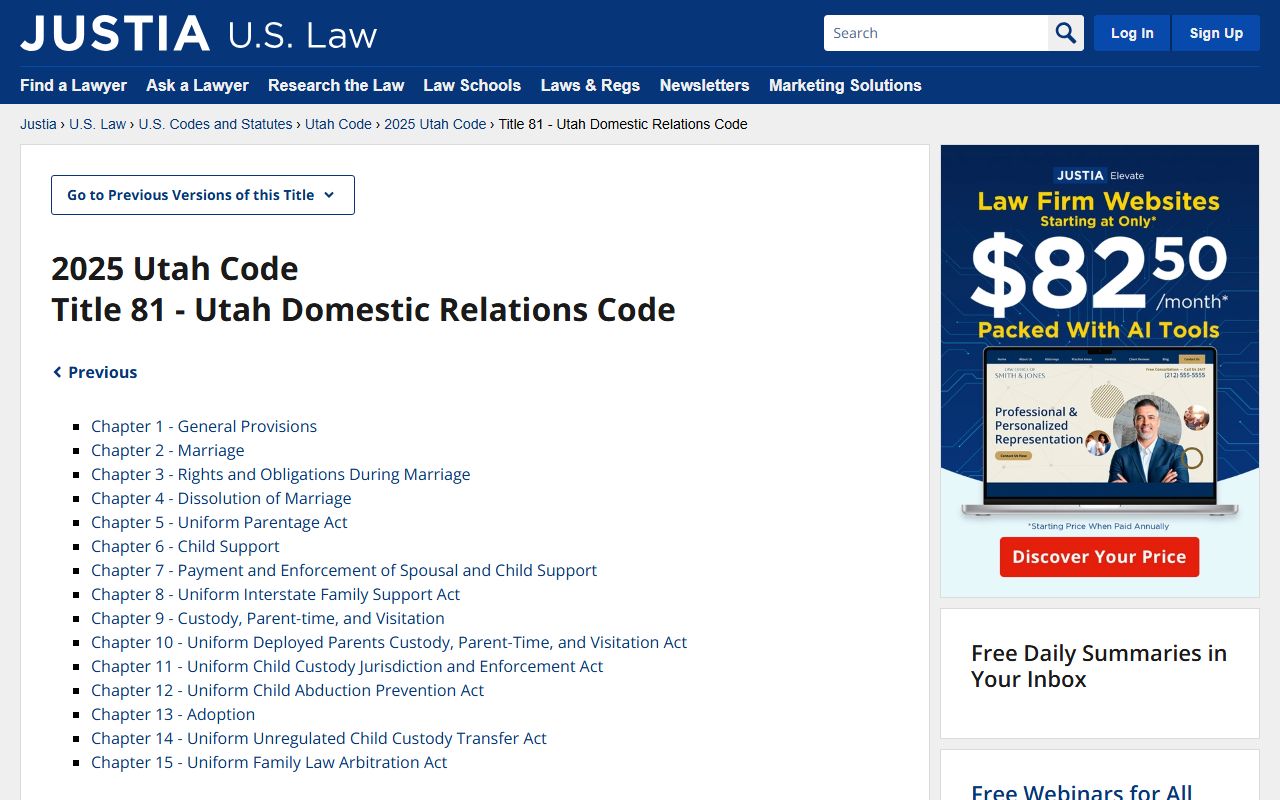
Utah also updated its domestic relations law significantly in 2024. Title 81, the new Utah Domestic Relations Code, took effect on September 1, 2024. It recodified the old Title 30 provisions. Title 81 covers custody, child support, parent-time, divorce, and related family law matters. Many older court orders still reference Title 30, so both sets of statutes remain relevant when reading existing family court records in Utah. You can review the current code at law.justia.com.
Note: Free public terminals at District Courthouses let you search XChange and view case documents without a subscription fee.
Searching Utah Family Court Records Online
Several online tools make it easy to find Utah family court records from home. The XChange portal at utcourts.gov is the primary resource. You can search by party name, case number, attorney name, or judge to find family law cases across all 29 Utah counties. XChange shows party names, filing dates, hearing schedules, case status, and links to documents. Subscribers can download full document images for a small per-document fee.
The MyCourtCase portal is another option. It is free for parties who are directly involved in an active case. If you are a petitioner, respondent, or attorney on a case, you can log in to view your hearings, documents, and orders at no charge. MyCourtCase does not require a subscription. It gives parties real-time access to their own case information in Utah.
The Utah Courts website also provides a full court directory at utcourts.gov/courts. The directory lists all 8 judicial districts and all 29 counties. Each entry includes the courthouse address, phone number, and hours of operation. You can use the directory to find the right court for a specific county or to confirm which district handles a particular region of Utah.
For those who prefer to search in person, public terminals are available at most District Courthouses. The Utah State Law Library in Salt Lake City offers free XChange access to walk-in visitors. You can also submit written requests to the court clerk in any county using the GRAMA process. The clerk must respond within 10 business days.
The Public Index Utah is an additional tool for searching court records. You can access it at utah.thepublicindex.org. It provides public case information without a subscription. Coverage and detail levels may vary compared to the official XChange system.
Types of Utah Family Court Records
Family court records in Utah cover a wide range of domestic relations matters. Each case type produces its own set of documents and orders. Knowing which type of case you are looking for helps you search more efficiently and find the right court file.
Divorce case files are among the most common family law records in Utah. A divorce file typically includes the petition for divorce, the answer, any temporary orders, financial disclosures, settlement agreements, and the final decree of divorce. Utah allows no-fault divorce on the ground of irreconcilable differences. Fault-based grounds are also available. The final decree is a public document that spells out how property, debts, custody, and support were divided.
Custody and parent-time case files record decisions about where children live and how parents share time. Utah courts follow the best interests of the child standard under Title 81, section 81-9-202. Case records include custody evaluations, parenting plans, temporary orders, and final custody decrees. Parent-time schedules, including the optional schedule of 145 overnights per year under section 81-9-303, may appear in these files. Child support orders are closely related and often appear in the same case or in a companion case file.
Adoption and guardianship records have special access restrictions. Adoption files are confidential in Utah. Original birth certificates and adoption orders are sealed by statute. Guardianship records, on the other hand, are generally public and can be found at the District Court in the county where the petition was filed. Protective order case files record restraining orders, emergency protective orders, and civil stalking injunctions. These are public records, though some identifying details may be redacted for safety reasons.
Paternity cases establish or contest the legal father of a child. These records include genetic test results, acknowledgment of paternity documents, and court orders establishing parentage. Domestic relations records also include cases involving the termination of parental rights, which are handled by Juvenile Courts in Utah. Juvenile Court records are generally not public due to the involvement of minors.
What Utah Family Court Records Contain
Understanding what is inside a family court file helps you know what to expect when you search. Court documents vary by case type, but most family law case files in Utah share a common set of elements.
A typical family court file in Utah contains the names of all parties, filing dates, case numbers, and the names of attorneys of record. Orders signed by the judge are part of the public record. These include temporary orders entered early in the case, as well as final orders resolving custody, support, property division, and other issues. Financial disclosures filed by the parties, including income statements and asset declarations, are part of the record. Hearing transcripts and evidence admitted at trial may also be in the file.
Some information in family court records is restricted. Social Security numbers are not available in public copies of court documents. Financial account numbers, such as bank account or credit card numbers, are redacted before public disclosure. Information about minor children, including their names and dates of birth, may be partially redacted in some records. Mental health evaluations ordered by the court are typically sealed. Juvenile court records, adoption files, and records sealed by court order are not available to the general public.
Note: If a document in a case file appears to be missing, it may have been sealed or restricted by court order rather than removed from the file.
Utah Family Court Records Access Rules
Utah has a strong tradition of open courts. Article I, Section 11 of the Utah Constitution guarantees the right of open courts. This constitutional protection supports public access to court proceedings and records. The Reporters Committee for Freedom of the Press has documented Utah's open courts framework at rcfp.org.
GRAMA, found at Utah Code section 63G-2, is the main state law governing access to government records. Under GRAMA, public records must be available for inspection free of charge. Fees may be charged for making copies. A records request must be submitted in writing to the government office that holds the records. For court records specifically, Rule 4-202 of the Utah Code of Judicial Administration sets the procedures. Courts have 10 business days to respond to a records request. If a request is denied, the requester may appeal the decision.
Certain records are protected from public disclosure. Adoption records are sealed under state law. Juvenile delinquency records are confidential. Mental health evaluations ordered in family cases are typically restricted. A party may petition the court to seal specific documents in any civil case, including a family law case. The court weighs the public interest in open records against the privacy interest of the party seeking sealing. Sealing is not automatic and requires a judge's order.
Family court records also contain some information that is always redacted before public access is granted. Social Security numbers, financial account numbers, and dates of birth for children fall into this category. Even so, most of the substantive content in a family court file remains open to the public in Utah.
Historical Utah Family Court Records at the State Archives
The Utah State Archives preserves historical court records dating back to 1850. These records cover probate courts, district courts, and justice courts from the territorial period through the modern era. Researchers looking for older family law case files, including early divorce and guardianship records, can find them at the State Archives. The collection includes records from all 29 counties in Utah.
The Utah State Archives court records page describes what is available and how to request access. Many historical records are available for on-site research at the State Archives facility. Some collections have been digitized and can be browsed online. For older cases that predate the XChange system, the State Archives is the primary source for locating family court records in Utah.
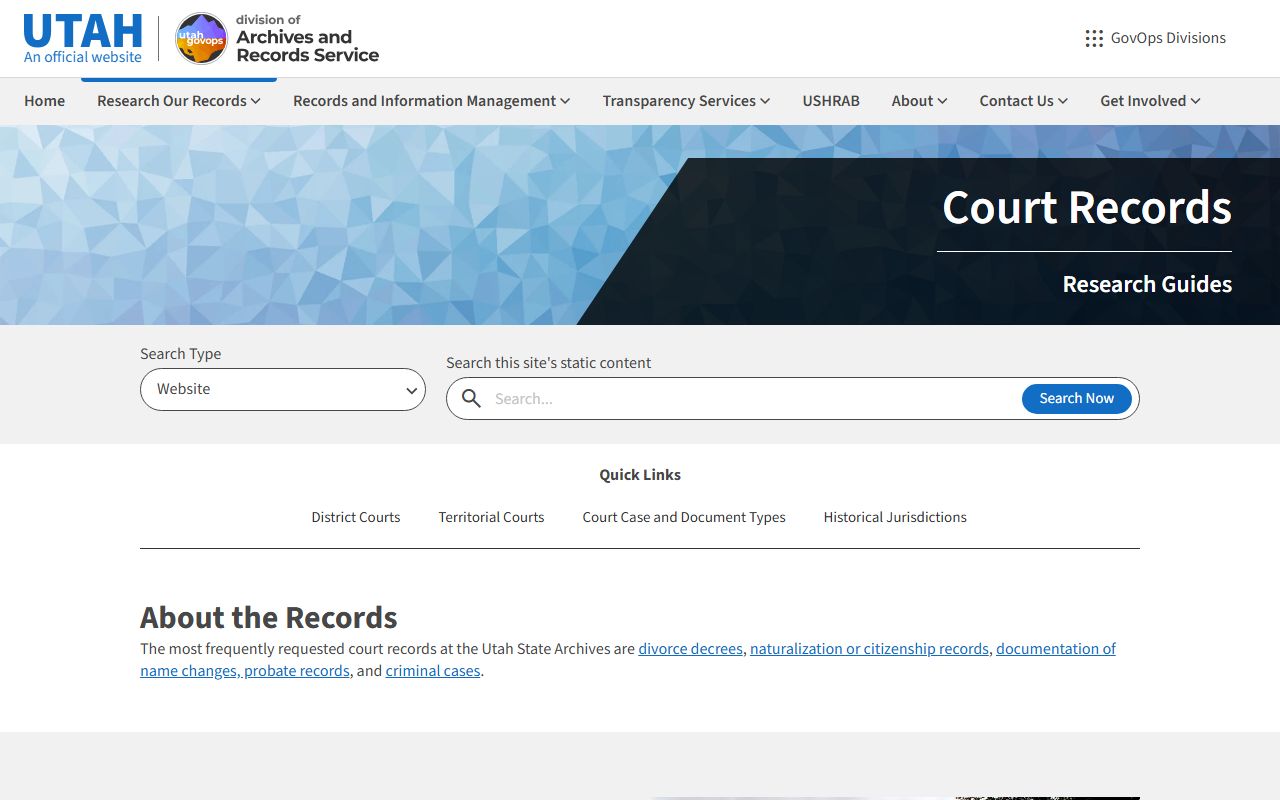
The State Archives staff can assist researchers with identifying which record series holds the documents they need. Historical probate records from the territorial period often include guardianship and estate matters that touch on family law issues. District court records from the late 1800s and early 1900s contain divorce and custody case files that are not available through modern online systems.
Utah Title 81 and Family Court Records
Utah's domestic relations law was reorganized and updated when Title 81 took effect on September 1, 2024. This was a major change. The new code replaced the old Title 30 provisions that had governed family law in Utah for decades. Title 81 covers divorce, custody, child support, parent-time, adoption, and related matters. Court orders issued before September 1, 2024 still reference Title 30, so older family court records use the prior numbering.
The Title 81 Domestic Relations Code on Justia provides the full text of the current law. Key provisions include section 81-9-202, which lists the factors courts weigh when determining the best interests of a child in custody cases, and section 81-6-105, which addresses a biological father's duty to contribute to pregnancy expenses. Parent-time rules appear in section 81-9-303, including the optional schedule providing 145 overnights per year.
When reviewing a Utah family court record, noting whether the order was entered before or after September 1, 2024 helps clarify which version of the law applied. Many existing orders have been or will be modified to align with Title 81 as cases return to court for post-decree proceedings.
MyCourtCase Portal for Utah Family Court Records
Parties in active Utah family law cases can use the MyCourtCase portal for free. This tool is designed for people who are directly involved in a case. You do not need a subscription or a per-search fee to use it. Log in at utcourts.gov/mycase using your case information to view hearings, documents, and orders.
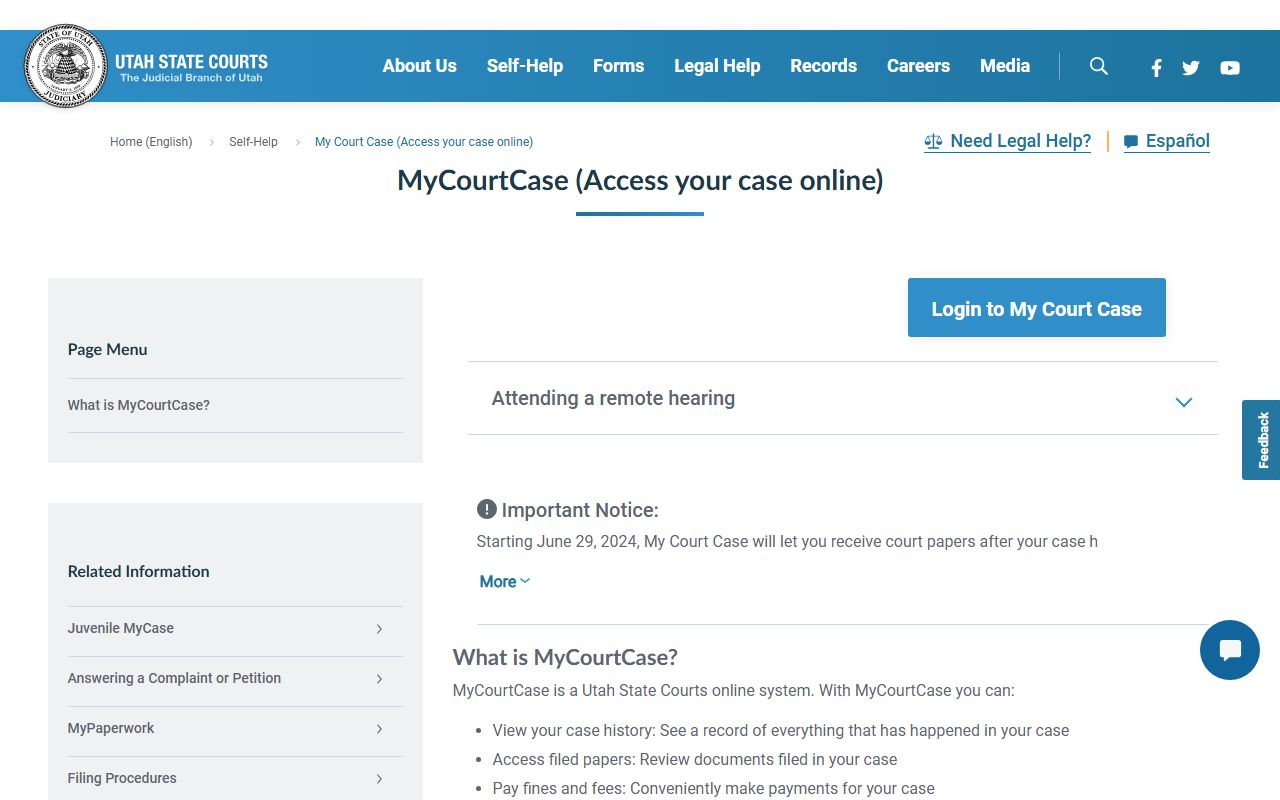
MyCourtCase is particularly useful for tracking upcoming hearing dates, reviewing recently filed documents, and confirming that orders have been entered. It provides real-time access to your own case file without a trip to the courthouse. Parties who have completed a case can still access records through XChange or by contacting the court clerk directly.
Note: MyCourtCase access is limited to parties of record and their attorneys; general public access to case documents requires XChange or an in-person visit.
Court Forms for Utah Family Court Cases
Utah Courts provide free interactive forms through the Online Court Assistance Program, known as OCAP. You can access these forms at utcourts.gov/forms. OCAP guides users through step-by-step questions and generates completed court forms based on the answers. The tool is available for divorce, custody, child support, protective orders, and many other family law matters in Utah.
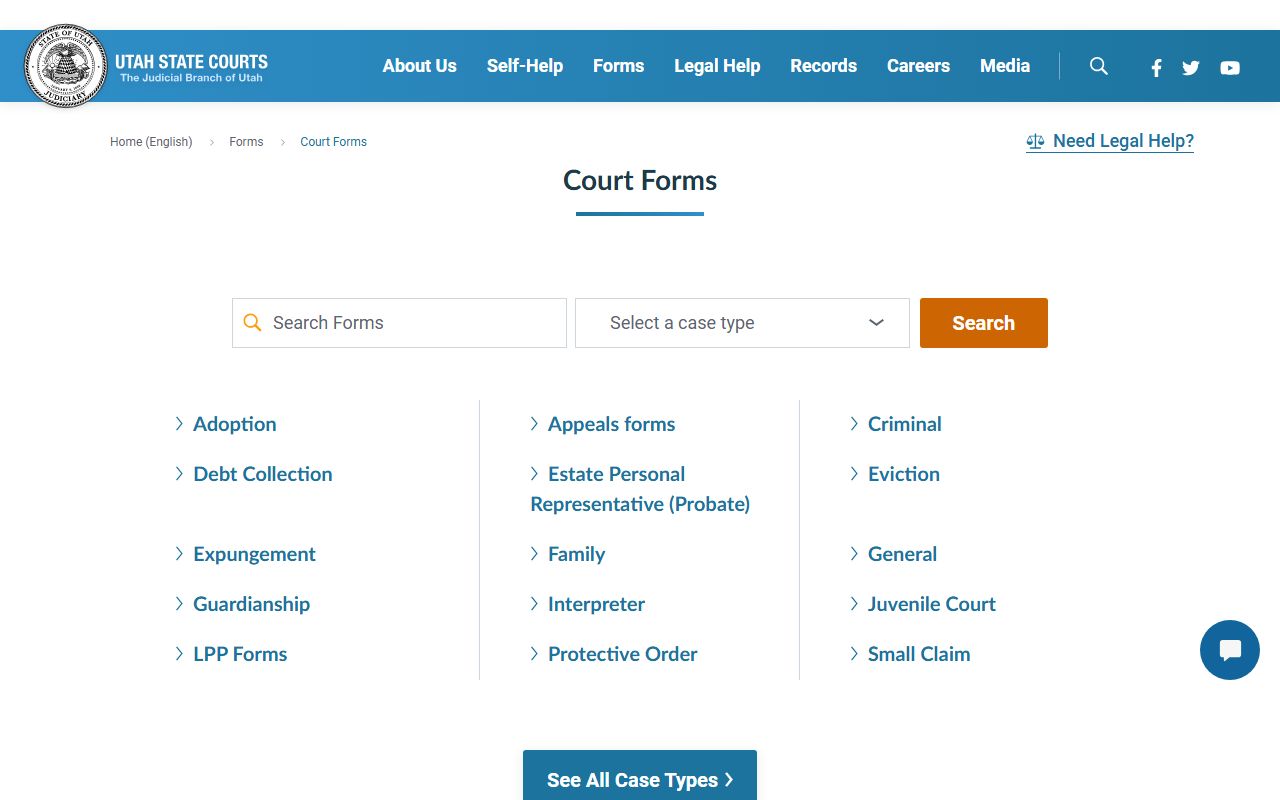
Using OCAP is free. It does not require registration. The forms produced by OCAP meet the current requirements of Utah District Courts and reflect the updated Title 81 code where applicable. After completing a form, you can print it and file it at the courthouse in your county. Filing fees set by the court apply separately when you submit documents to open or continue a case.
Utah Court Directory and Family Court Records by District
Utah's 29 counties are served by 8 judicial districts. Each district has one or more District Courts. Knowing your judicial district helps you find the right court for a family law case or records request. The full court directory is available at utcourts.gov/courts.
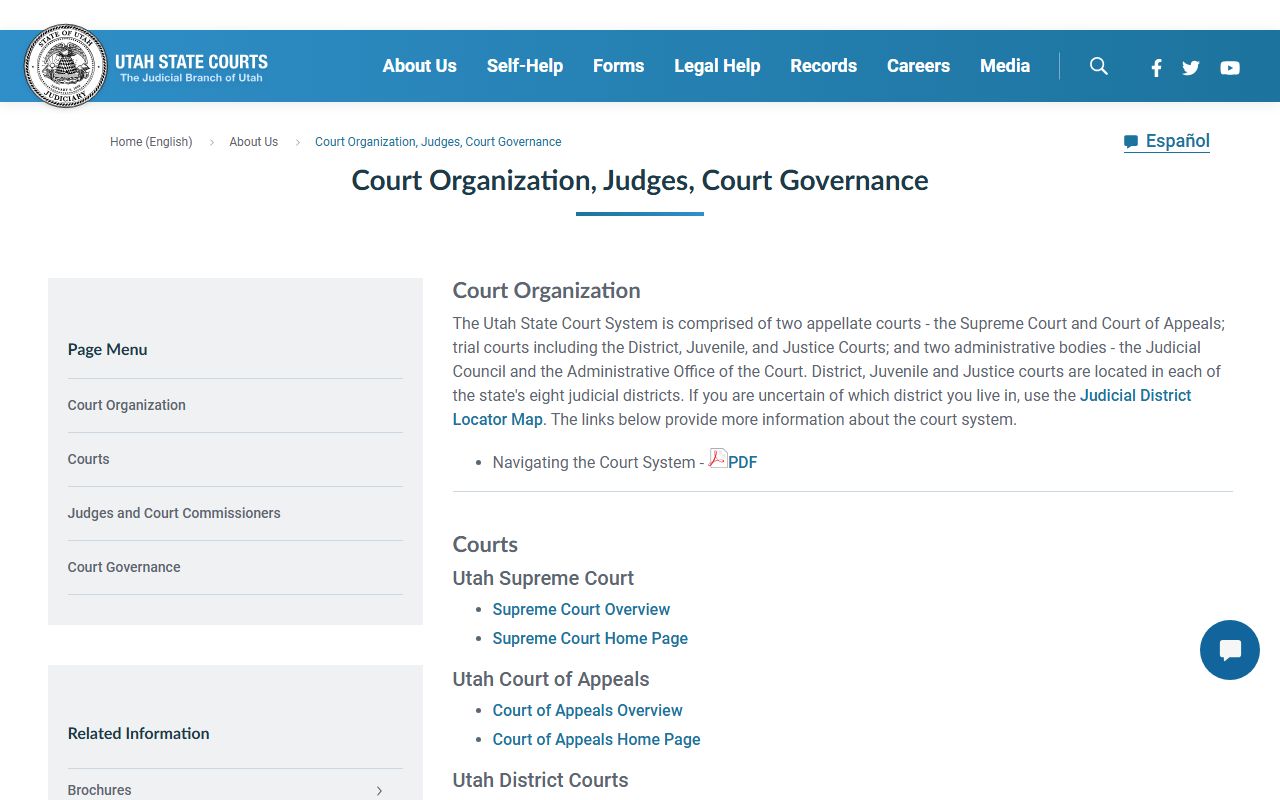
The directory includes courthouse addresses, phone numbers, and maps for all locations. Large counties like Salt Lake, Utah, and Weber each have multiple courthouse locations. Smaller, rural counties may share district resources with neighboring areas. When you are searching for family court records in a specific Utah county, the court directory confirms the exact courthouse location and clerk contact information.
The Public Index for Utah Family Court Records
The Public Index Utah provides an additional way to search court case information without a subscription. Visit utah.thepublicindex.org/court-records to search by party name or case number. The tool aggregates publicly available court case data.
The Public Index can be a useful starting point when you do not have a case number and want to confirm whether a family court case exists before subscribing to XChange. Coverage may not be complete for all counties or all case types, so verifying results against the official XChange system is always a good step.
Open Courts and Utah Family Court Records Transparency
Utah has one of the strongest open courts traditions in the country. The state constitution, court rules, and GRAMA together form a framework that keeps most family court records accessible to the public. The Reporters Committee for Freedom of the Press documents this framework in detail. Their open courts compendium for Utah is available at rcfp.org.
Open courts mean that members of the public can attend hearings, review court files, and obtain copies of orders and documents in most family law cases. The few exceptions, such as adoption files and sealed records, require specific court orders to restrict access. For most divorce, custody, child support, and protective order cases, the full case file is available to anyone who asks at the courthouse or through XChange.
Utah Legal Help for Family Court Cases
Several organizations provide legal help for family law matters in Utah. Utah Legal Services offers free assistance to people with low incomes. They handle family court cases including divorce, custody, child support, protective orders, and related matters across the state. Visit utahlegalservices.org to find out if you qualify and to connect with help in your area.
The Utah State Bar runs a lawyer referral service. Call (801) 531-9077 to be connected with a family law attorney in your area. The referral service covers all types of family court cases in Utah. An initial consultation with a referred attorney is available at a reduced rate. This is a good option if you need advice about a specific case or want to understand your rights before filing.
The Utah Courts website at utcourts.gov also offers self-help resources. The OCAP forms tool, court guides, and procedural instructions are all available at no cost. These resources are designed for people who represent themselves in family court. The site covers the process for filing, serving documents, attending hearings, and responding to motions in Utah family law cases.
Note: Utah Legal Services focuses on people with low income; others seeking an attorney may use the Utah State Bar referral line at (801) 531-9077.
Browse Utah Family Court Records by County
Each of Utah's 29 counties has its own District Court that maintains family court records. Select a county below to find court contact information and local resources for family court records in that area.
Family Court Records in Major Utah Cities
Residents of major Utah cities file family law cases at their county courthouse. Select a city below to find family court records information for that area.